
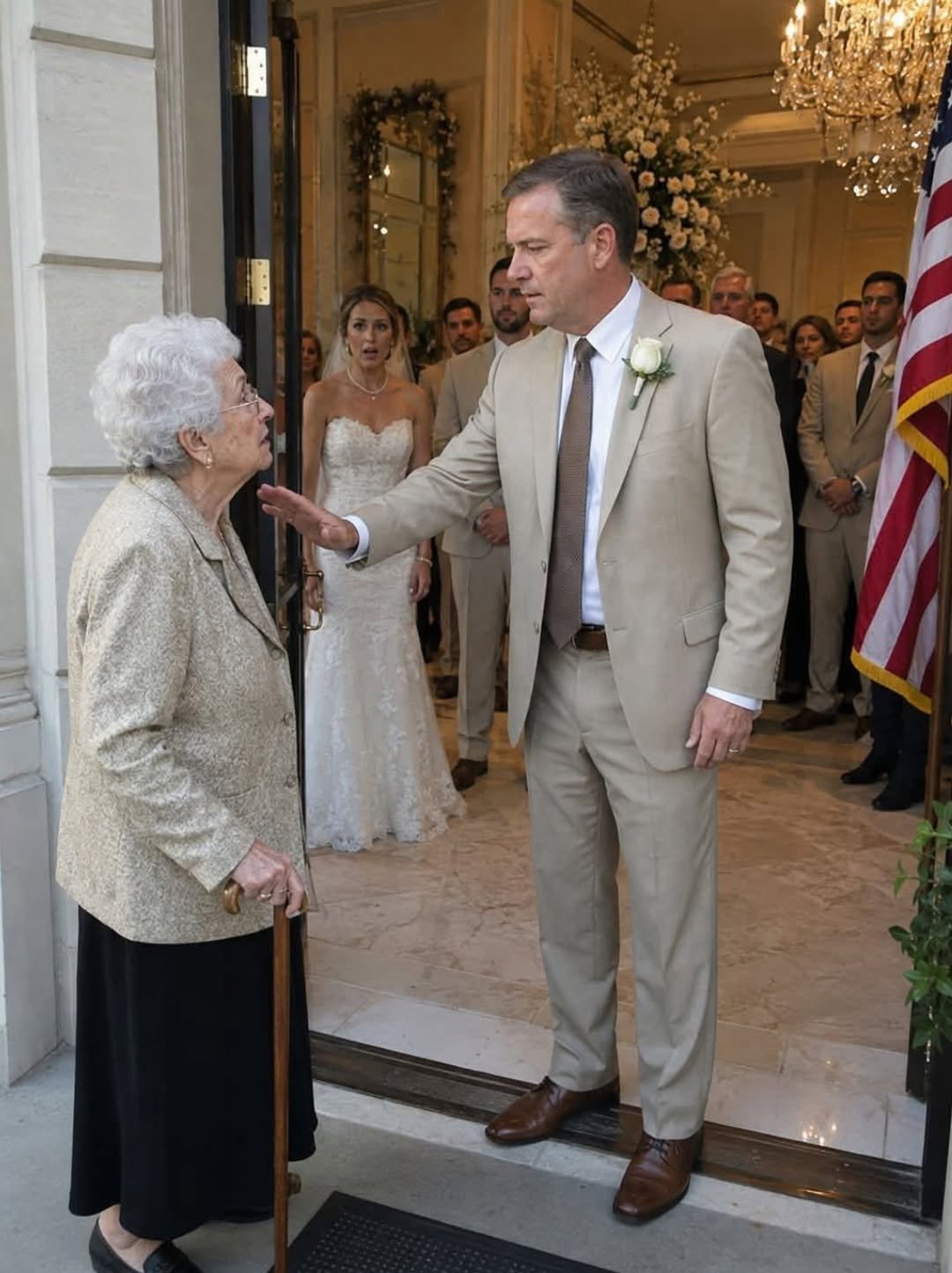
I looked at him.
“What about it?” I said.
“You didn’t make a scene,” he said. “You could have. Two hundred people, the whole day ahead, you had every reason to make a scene.”
“I had every reason not to,” I said.
“What’s the distinction?” he said.
I thought about how to explain this.
“A scene would have given Gerald the story,” I said. “The difficult mother. The dramatic scene at the entrance. That would have been the memory.”
“And instead?” he said.
“Instead the memory is that his mother said it’s okay, son, and walked away,” I said. “And then spent six months documenting what happened.”
He thought about this.
“That’s more frightening,” he said.
“Yes,” I said. “I know.”
Rachel laughed.
It was the first time she had laughed in the conversation and it broke something that had been tense in the room, and we went back to the wine and the fire and the tree and the things that Christmas evenings are supposed to be.
Before they left on Christmas morning, I gave Rachel a letter.
It was from Robert, on behalf of the trust.
The trust distribution for her marriage: forty thousand dollars.
She read the letter.
She looked at me.
“Grandma,” she said.
“It’s yours,” I said. “Your grandfather designed the trust to give you something at significant moments. Your marriage is a significant moment. This has nothing to do with anything else.”
“It feels like it should be connected,” she said.
“It isn’t,” I said. “The trust is your grandfather’s gift to you. The settlement was my accounting. These are separate things.”
She put the letter in her bag.
Daniel shook my hand.
He held it for a moment.
He said: “Thank you, Eleanor.”
“For what specifically?” I said.
“For the dinner,” he said. “And for everything that doesn’t need to be specified.”
He was a careful person.
He always said exactly what he meant.
They left.
I stood at the door.
Then I went inside and sat in the study and opened my notebook.
I wrote: Christmas. Rachel and Daniel. The fire. The lemon tart from the freezer.
I wrote: Rachel told me what Gerald said. He needed to feel like he was giving something.
I wrote: I understand this and I do not forgive it. These are different things.
Then I wrote: The dress is at the dry cleaner. I have another occasion coming.
I put the notebook down.
The study was quiet.
The folder was in the filing cabinet.
The settlement was concluded.
The trust distribution was sent.
The acknowledgment was signed and in the file.
And my son was my son, which was a thing I could not change and which I was learning to carry differently from how I had carried it in the spring.
It weighed something now that it had not weighed before.
It would weigh that thing for the rest of my life.
This is what these situations cost: not the money, though the money is real.
The weight you carry forward.
I have carried it since June.
I will carry it forward.
But I am Eleanor Whitmore.
I am seventy three years old.
I keep records.
I print things.
I call my lawyer.
And I have another occasion coming.
This time I will be in the room.
That is decided.
That has always been decided.
That is the whole of it.
That is enough.
In February, I picked up the dress.
The dry cleaner had kept it carefully, pressing the skirt so the pale pink sat exactly as it had when I had first put it on in the mirror in June.
I brought it home and hung it on the back of the bedroom door.
I looked at it for a moment.
Then I left it there.
The occasion I had in mind was not yet certain, but it was coming.
Rachel called in March to tell me that she was pregnant.
She called me first.
She told me before she told her parents.
I did not say anything about this. But I noted it.
She said: “Grandma. You’re the first to know.”
“I’m honored,” I said.
“I wanted you to be first,” she said.
“Are you well?” I said.
“Tired and very happy,” she said.
“That sounds right,” I said.
“Daniel is very calm about it,” she said. “Almost too calm. I think he’s waiting until I’m calmer to have his reaction.”
“He’s being careful of you,” I said.
“Yes,” she said. “He does that.”
She told me the due date: October, if the calculation was right.
October in Savannah was beautiful.
I sat in the study after the call and thought about the things that were ahead: a great-grandchild. Rachel’s child. James’s great-grandchild.
I thought about what it would mean to be in the room.
Not at the door.
In the room.
The folder was in the filing cabinet.
The settlement was concluded.
The dress was on the bedroom door.
And ahead of me was something larger than the June occasion: the first child of the next generation.
I opened the notebook.
I wrote: Rachel is pregnant. October.
Then I wrote: I am going to be there.
Not a statement of hope.
A statement of fact.
I am Eleanor Whitmore.
I am seventy three years old.
I am going to be there.
That is decided.
That has always been decided.
That is the whole of it.
That is everything.
That is enough.
Always enough.
The dress is on the door.
The record is kept.
The occasion is coming.
I will be in the room.
That is the whole of it.
One more thing.
Margaret asked me once, in the summer, what James would have thought.
I said: he would have been furious.
She said: and?
I said: and then he would have sat down and made a list.
She laughed.
She said: you married each other because you both made lists.
I said: probably.
She said: do you miss him?
I said: constantly.
She said: what do you miss most?
I thought about it.
I said: I miss having someone who understood why I kept the receipts.
She said: he understood that?
I said: he kept them first. I learned it from him.
She said: and Gerald didn’t learn it.
I said: Gerald learned something else. What it was, I’m still working out.
She said: do you think you’ll work it out?
I said: probably not. Not completely. Some things resist understanding. You just learn to carry them.
She nodded.
She said: the record is always there, though.
I said: yes. The record is always there.
That is what James taught me.
The record is always there.
Keep it.
It is how you respect your arrangements.
It is how you know what happened.
It is how you prove what was real.
It is how you stay.
The dress is on the door.
The record is in the cabinet.
October is coming.
I am going to be there.
In the room.
That is the whole of it.
That is everything.
That is enough.
James knew this.
Now I do too.
The record is always there.
That is enough.
Always enough.
See more on the next page
