
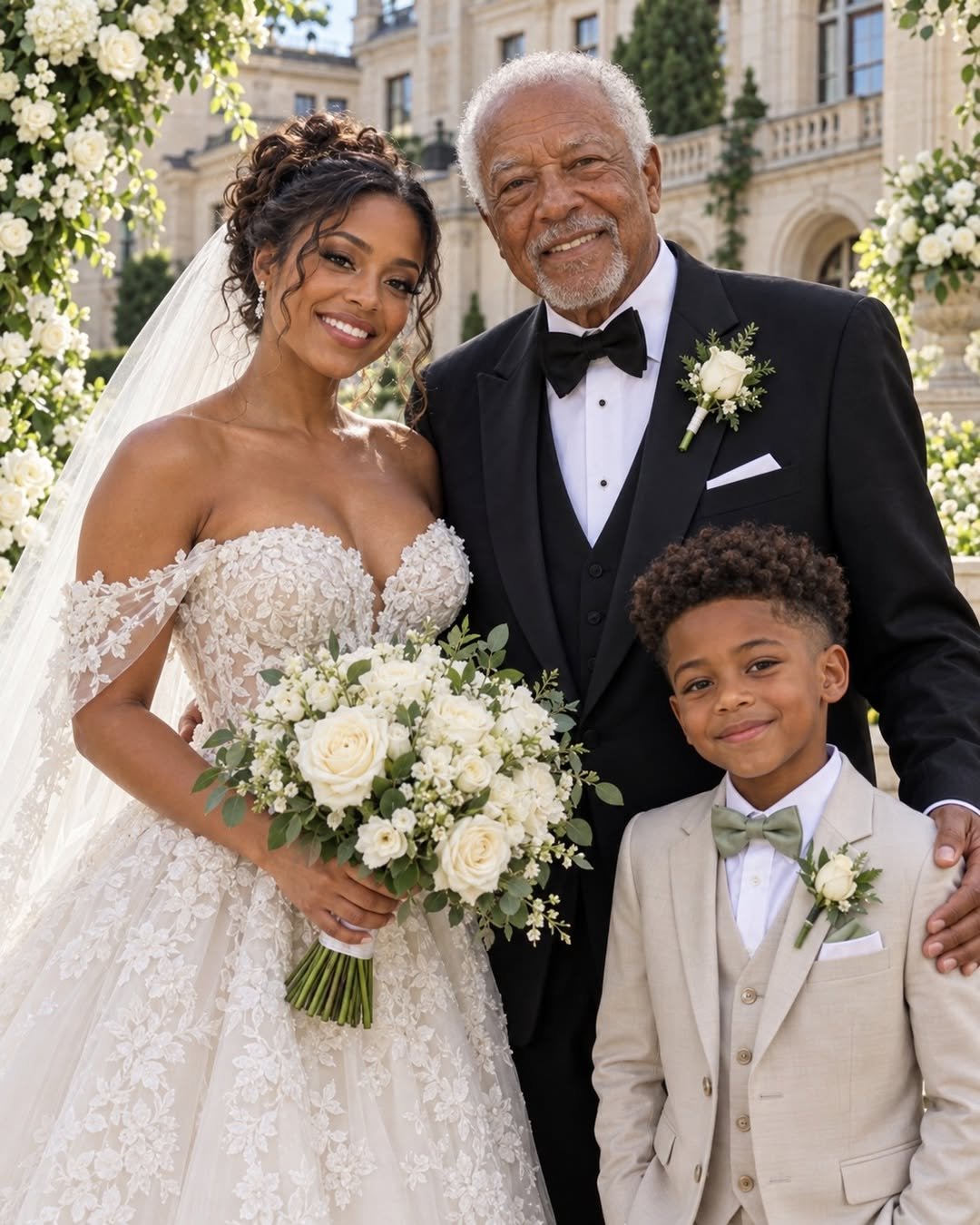
“There’s a foundation,” he said. “I built it years ago and my family has ignored it, because it doesn’t pay them. It helps families like yours — parents who can’t afford the surgery their child needs. I’ve been funding it quietly for a decade. And I need someone to run it after I’m gone, someone who knows, in her own body, what it is to sit in a hospital hallway unable to pay for your child’s life. I couldn’t leave it to my nieces and nephew; they’d shut it down and pocket the endowment by Christmas.
I’m leaving it to you. Because you’re the one person I’ve ever met who will understand exactly what it’s for. That’s what you really signed for, Grace. Not to be my wife in any way you feared. To be my heir, and the keeper of the one thing I’ve done that ever mattered.”
Chapter 4: The Months We Had
Caleb had his surgery two weeks after the wedding. It went perfectly. And my son came home to recover — to a mansion, of all places, with a grumpy, dying old man who turned out to adore him.
Those were strange and beautiful months, the last of Arthur’s life. He had told his sister’s caregiver he needed a wife his children couldn’t control. What he actually got, in the end, was the family he’d never had. Caleb, once he was strong enough, would sit with Arthur for hours — the old man teaching the boy chess, and cards, and the history of every painting in the house. Arthur, who’d raised three strangers, spent the last season of his life becoming something like a grandfather to a little boy who’d never had one, and I watched a man who thought he’d die surrounded by vultures instead die surrounded by love.
I did not fall in romantic love with Arthur, and he never wanted me to — that was never the shape of it, and he’d been clear from the closed-door conversation onward. What grew between us was something else, rarer maybe: a deep, real, chosen-family love. I cared for him at the end the way I’d cared for my patients my whole life, except this time it was for a man who’d looked at me when I had nothing and decided I was worth everything. I held his hand through the hard nights. Caleb drew him pictures. And when Arthur died, peacefully, in a house that had gone quiet and warm, my son and I were the ones at his bedside — not the relatives who’d been counting his money, who weren’t even in the state.
He’d wanted a good death, free of the vultures. I made sure he got one.
Chapter 5: The Foundation I Kept
That was five years ago.
Arthur’s brother’s children did exactly what he predicted. They contested everything, screamed manipulation and undue influence, hired armies of lawyers. And they lost, completely, because Arthur Pendleton had spent his last clear months building a wall around his wishes that no amount of resentment could breach. He’d out-planned his own greedy family from beyond the grave, the way he’d out-planned everyone his whole self-made life. What he left to me and Caleb stayed with me and Caleb. What he left to his relatives — a modest, pointed sum — was exactly what he’d decided they’d earned.
But the inheritance isn’t the part of this that matters to me. The foundation is.
I run it now. The Pendleton Fund, which helps parents pay for the surgeries their children need and cannot afford — the exact nightmare I was living the day Arthur met me. I have spent five years being, for other desperate parents, the miracle Arthur was for me. I sit with mothers whose hands shake when the hospital calls, the way mine did, and I tell them the words no one told me: it’s going to be okay. We’ve got it. Your child is going to live. There is no work on earth more meaningful, and I get to do it every day, because a lonely old man saw a caregiver treat him like a human being and decided to hand her the one thing his own family would have destroyed.
Caleb is thirteen now, healthy, alive, tall enough that Arthur wouldn’t recognize him. He remembers “Grandpa Arthur.” He plays chess the way Arthur taught him. And he knows the whole story now — that a dying man he loved paid for his life, and then gave us a mission worth living for. He wants to run the foundation someday. I think Arthur would burst with pride.
Here’s what I learned, bracing for the worst behind a closed office door on my wedding night.
The thing that looks like a desperate bargain is sometimes an act of grace in disguise. I married Arthur believing I was selling myself to save my son, and I spent that whole wedding day sick with shame and fear. And then a dying man closed a door and told me the truth: that he hadn’t bought me at all. He’d chosen me. He’d looked past a fortune everyone else wanted and found the one person who didn’t, and he’d spent his last strength making sure his life’s real work landed in the hands of someone who’d understand it. I went into that mansion thinking I was the desperate one. It turned out the loneliest, richest man in the county had been just as desperate — for one person who’d love him for nothing, and grieve him for real. We saved each other. That’s usually how it works.
I married a dying millionaire to save my son.
I thought I knew what that made me.
I was wrong.
Behind that closed door,
a lonely old man told me the truth:
he hadn’t bought a wife.
He’d chosen an heir—
the one person in a house full of vultures
who’d treated him like a man instead of a will.
The surgery was never the price.
It was his way of proving I could trust him.
What I really signed for
was a family for a man who’d never had one,
a fortune his greedy relatives couldn’t touch,
and a foundation that would spend the rest of my life
catching other drowning parents
the way he caught me.
He gave my son his life.
He gave me his life’s real work.
And I gave him, at the end,
the one thing all his money never could:
a good death,
in a warm house,
holding the hands of the family
he chose
when no one else deserved him.
Welcome to the family, he said.
May you like
- When we were 19, my best friend and I promised that if we were both single at 60, we’d find each other I turned 60 last Tuesday, and my old landline rang.
- Five Minutes After Our Divorce, I Flew Overseas With Our Two Children Then My Ex’s Family Heard the Doctor’s Ultrasound Verdict
- My 63-year-old mother-in-law met a man on our family vacation and decided not to come home with us. Five days later, she called me at midnight and whispered, “I need you to save me. But please don’t tell my son.”
- My Husband Left Me in Labor for His Mother’s Birthday Two Days Later, Military Vehicles Filled Our Driveway
- Cop Poured His Drink on a Black Woman in Her Own Driveway Then He Learned Who She Was
I never left.
THE END
See more on the next page
