
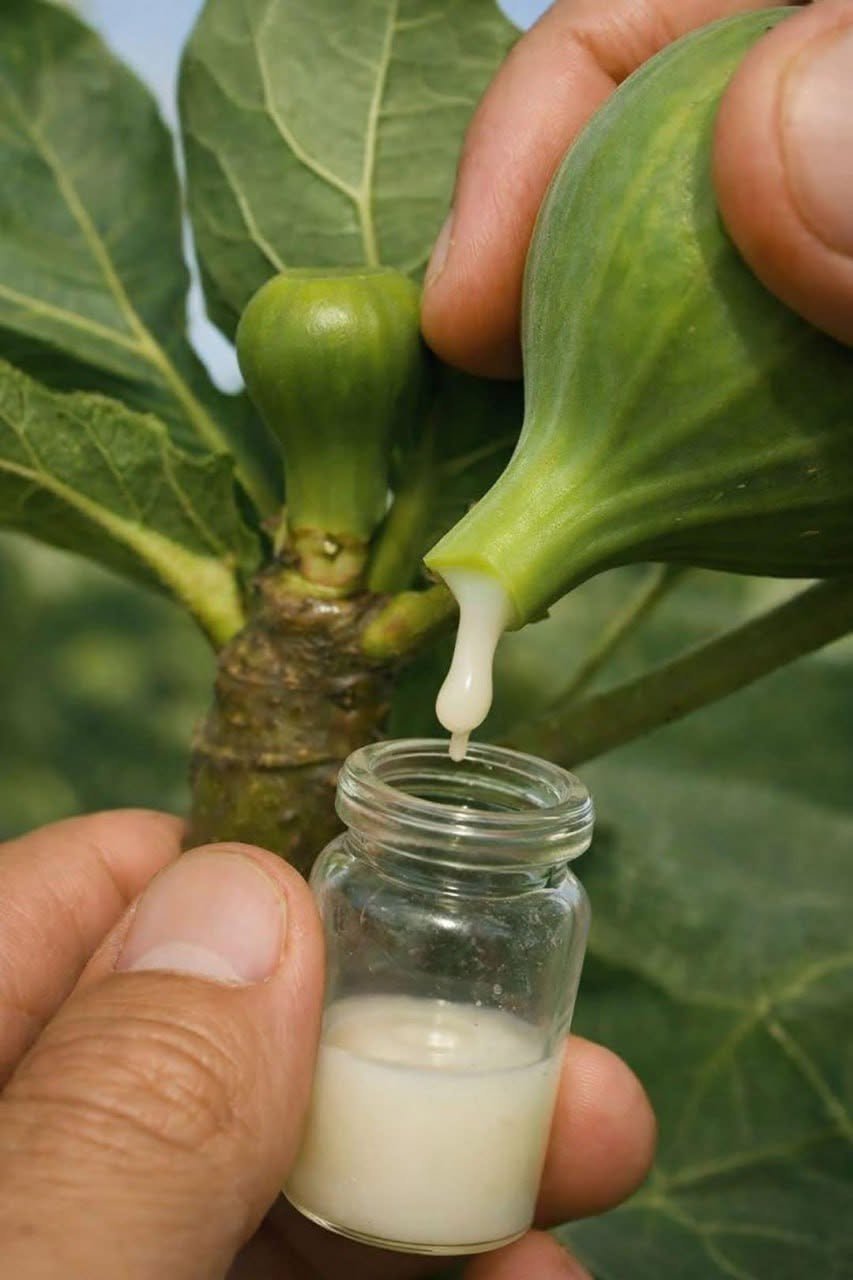
The image shows a fig tree releasing a milky white sap (latex) from a freshly cut stem or leaf stalk. This is often called fig milk or fig latex. It is different from fig juice made by blending the edible fruit.
Fig trees have been valued for centuries as a food plant, and the fruit itself provides nutrients such as fiber and potassium. However, some claims circulating online about fig sap being a powerful cure for serious diseases are not supported by good clinical evidence.
1. What is the white liquid in the picture?
When a fresh fig leaf, stem, or unripe fig is cut, the plant can release a thick, milky substance.
This is fig latex, not ordinary fruit juice.
It contains naturally occurring plant compounds, including enzymes and other substances that protect the plant. Because it can irritate the skin, it should not automatically be treated like a harmless homemade remedy.
2. Why have people traditionally used fig latex?
Traditional practices in different regions have included applying small amounts of fig latex to the skin for various purposes.
You may also see claims that it can:
- Remove warts
- Treat skin growths
- Improve skin appearance
- Fight infections
- Treat fungal problems
- Cure other diseases
However, traditional use does not necessarily mean that a treatment has been proven safe or effective.
Most importantly, fig latex should not be presented as a replacement for medical treatment.
3. Fig fruit is a different story
The edible fig itself is a nutritious fruit.
Figs provide dietary fiber, potassium, and other nutrients, and whole fruit generally provides more fiber than juice. USDA nutrition guidance emphasizes eating a variety of whole fruits, while noting that fruit juice contains less fiber than whole fruit.
That makes fresh figs a much more straightforward food choice than consuming concentrated plant latex.
4. How to enjoy figs safely
If you want the nutritional benefits of figs, the simplest approach is to eat the ripe fruit.
Simple fresh-fig serving
Ingredients:
- 2–3 ripe figs
- Plain yogurt, optional
- A few nuts, optional
- Cinnamon, optional
Step 1: Wash
Rinse the figs thoroughly under clean running water.
Step 2: Remove the stem
Cut off the tough stem at the top.
Step 3: Eat whole
You can eat the skin and seeds along with the soft interior.
Step 4: Add toppings
For a simple snack, serve the figs with plain yogurt and a small handful of nuts.
This gives you a combination of fruit, fiber, protein, and healthy fats.
5. What about making “fig juice”?
If by fig juice you mean a drink made from the edible fruit, you can prepare it easily.
Homemade Fig Drink
Ingredients:
- 3–4 ripe figs
- 1 cup cold water
- A squeeze of lemon, optional
- Ice, optional
Preparation
- Wash the figs.
- Remove the stems.
- Cut the figs into pieces.
- Place them in a blender.
- Add the water.
- Blend until smooth.
- Add lemon if desired.
- Serve immediately.
For more fiber, blend the whole fruit rather than straining it.
6. An important warning about the white sap
This is the part that deserves the most attention.
Do not drink fig latex simply because it looks like milk.
The milky sap from a fig plant is a plant latex and can cause irritation. Contact with skin, particularly followed by sunlight exposure, may cause significant skin reactions in some people.
Therefore, collecting large quantities of the sap and consuming it as a homemade medicine is not something I would recommend.
If sap gets into the eyes, rinse them thoroughly with clean water and seek medical advice if irritation persists.
7. Is fig sap really “worth its weight in gold”?
That’s a catchy phrase, but it is an exaggeration rather than a medical fact.
Figs certainly have nutritional value, and the fruit can be part of a healthy diet. But there isn’t good evidence showing that fig latex is a miracle substance capable of treating cancer, diabetes, infections, or other serious diseases.
The safest message is:
Enjoy the fruit—but don’t confuse the fruit with the plant’s milky latex.
8. The biggest takeaway
The fig tree is much more interesting than many people realize. Its fruit can provide useful nutrients, while the white sap is a completely different plant substance that deserves caution.
So if you have a fig tree at home, eat the ripe figs, wash them properly, and avoid experimenting with the raw latex as a medicine.
Final thought
Not everything natural is automatically safe, and not every traditional remedy is scientifically proven. The best way to appreciate figs is to enjoy the delicious fruit while treating the plant’s milky sap with appropriate caution.
This article is for educational purposes and does not replace advice from a qualified healthcare professional.
See more on the next page
