
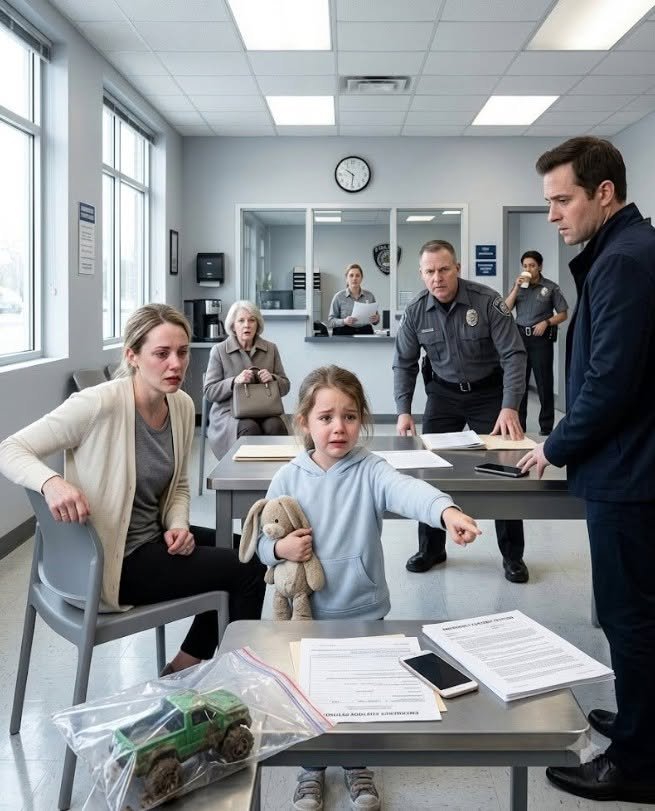
“No, baby. You saved your brother.”
Derek was charged with felony child endangerment, interference with custody, filing a false report, evidence tampering, and making false statements to police.
The emergency custody petition he had filed the day before became part of the prosecution’s timeline.
So did the edited recording.
So did the parking lot footage from Riverside Park.
So did the green toy truck in the plastic evidence sleeve.
So did Vera’s statement, taken by a child forensic interviewer two days later in a room with soft chairs, animal stickers on the wall, and a camera Renata could see but Vera barely noticed.
Constance tried once to call Renata from an unknown number.
Renata did not answer.
Later, her attorney forwarded a message from Constance claiming she had been misled and had only wanted what was best for the children.
Renata read it once.
Then she saved it in a folder labeled TURNER DOCUMENTATION.
Not anger.
Evidence.
That was the difference Derek had never understood.
Anger burned hot and vanished.
Evidence waited.
In court, Derek’s attorney argued that it had been a desperate mistake by a father afraid of losing access to his children.
The judge did not look impressed.
A desperate mistake was forgetting a pickup time.
A desperate mistake was shouting during an argument.
A desperate mistake was not luring a three-year-old into a maintenance shed, locking him inside, accusing his mother of selling him, and playing edited audio to police while the child cried alone.
Renata testified for twenty-three minutes.
She did not cry until the prosecutor played the video from Derek’s phone.
When Jonah’s small voice on the recording asked, “Where’s Mommy?” Renata pressed both hands over her mouth.
Across the aisle, Constance lowered her head.
Derek stared straight ahead.
The custody order came first.
Sole legal and physical custody to Renata.
Supervised contact suspended pending criminal proceedings.
No direct contact from Derek or Constance.
The criminal case took longer.
By the time Derek accepted a plea, Jonah had started sleeping through most nights again, though he still panicked if doors stuck.
Vera had begun therapy too.
She drew the police station over and over.
Always the same details.
The buzzing lights.
The desk.
The phone.
The toy truck.
In every drawing, Renata noticed something that made her cry only after the children were asleep.
Vera always drew herself standing.
Small, yes.
Scared, yes.
But standing.
Months later, Renata took Jonah and Vera back to Riverside Park with their therapist’s guidance.
Not to erase what happened.
Nothing erased it.
But to teach their bodies that the park was not the monster.
The swings were just swings.
The grass was just grass.
The shed was locked, repainted, and used by maintenance workers who had no idea a family had been changed beside it forever.
Jonah brought a new truck that day.
Red, not green.
He pushed it through the mulch while Vera sat on the swing and watched him with the fierce seriousness of a guard dog.
Renata sat on a bench three feet away.
Her phone rang once.
She did not answer it.
She watched her children instead.
There would be years of repair after Derek.
Years of therapy appointments, court notices, nightmares, questions, and small victories that looked ordinary from the outside.
A closed door opened without fear.
A child laughing near a shed.
A mother hearing her own phone ring and not flinching.
But Renata kept one sentence close, the one the police station had taught her the hard way.
An entire room can teach a mother that every natural reaction is evidence against her.
Vera had taught that room something back.
Sometimes the smallest voice is the only one telling the truth.
And sometimes the child everyone forgets is listening is the one who saves the life everyone else is too busy judging to protect.
See more on the next page
