
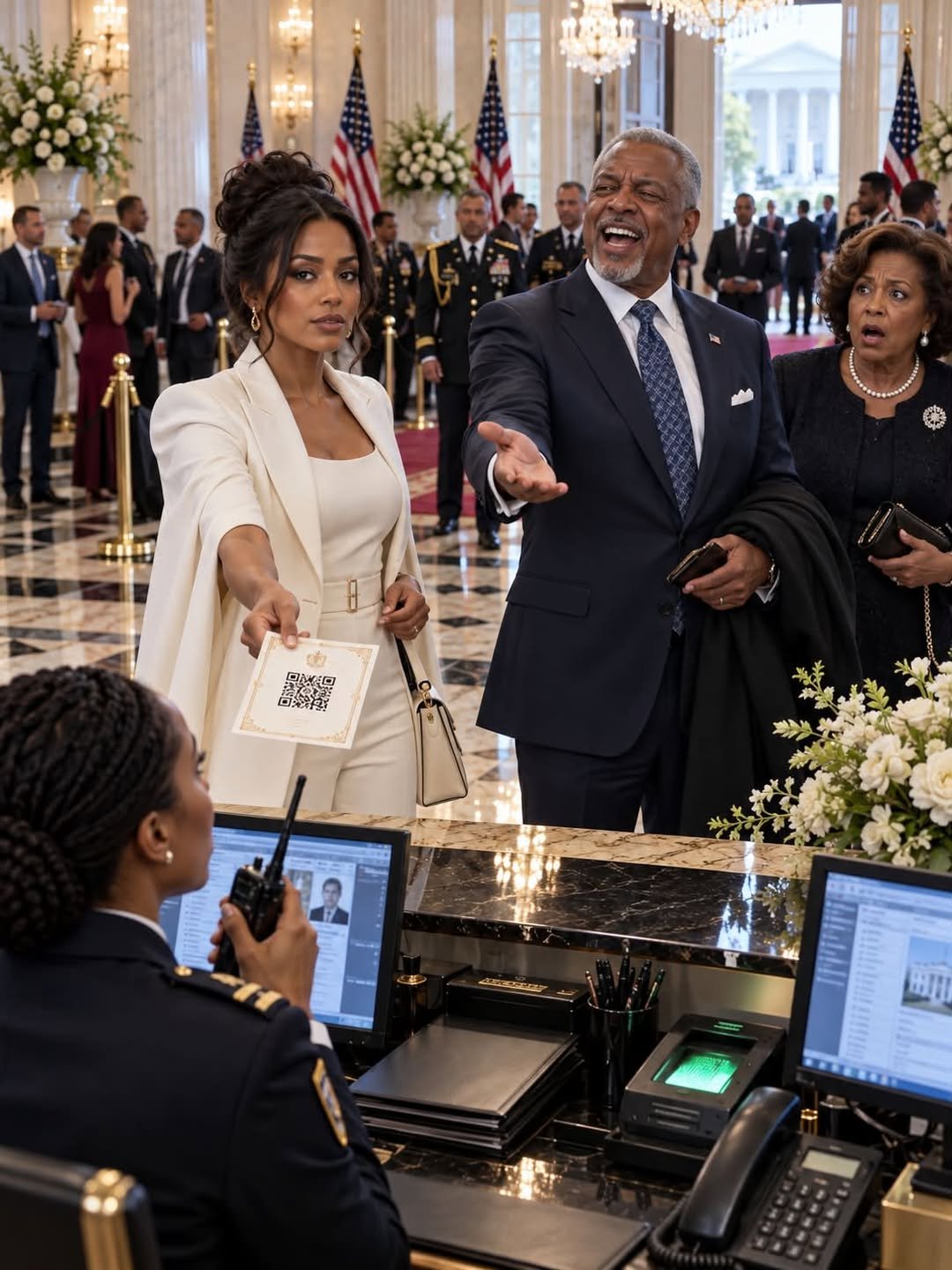
FOR 26 YEARS MY FATHER PRETENDED I DIDN’T EXIST. OUTSIDE THE WHITE HOUSE, HE ORDERED ME TO STAY AWAY AND ACT LIKE A STRANGER.
THEN A FOUR-STAR GENERAL SALUTED ME — AND MY FATHER LEARNED I WAS THE OFFICER WHO’D DECIDE HIS DEFENSE CONTRACT.
Chapter 1: The Outstretched Hand
For twenty-six years, my father pretended I didn’t exist. When he saw me in uniform outside the White House, he ordered me to stay away and act like we were strangers.
My name is Colonel Maya Caldwell. My father Victor abandoned me twenty-six years ago, raised his wife’s son Blake as his only child, and never once answered my calls. At the White House East Wing, he saw me in uniform and hissed, “Pretend you don’t know us. Today matters to Caldwell Defense Systems.”
Blake mocked my uniform, missing the silver eagles. “Security detail?”
Then the Secret Service officer scanned my invitation, went still, and called General Hale’s office. A four-star general strode out, passed my father’s waiting smile, and saluted me. “The Secretary of Defense is waiting. Your assessment of the Caldwell Defense contract is why this meeting was called.”
My father went white. I wasn’t security. I was the officer whose recommendation would decide whether he got the contract he’d worn a tuxedo to win.
Suddenly he reached for me. “Maya. Sweetheart. You’re my daughter.”
I looked at the hand he’d refused to offer for twenty-six years, extended the second I became useful. And I knew exactly what he wanted.
Chapter 2: The Father Who Erased Me
Let me tell you about the twenty-six years my father spent pretending I didn’t exist, because you have to understand them to understand why his outstretched hand meant nothing to me.
My mother married Victor young. When I was ten, they divorced, and Victor — climbing, ambitious, building Caldwell Defense Systems into something that could put him in tuxedos at the White House — decided that a daughter from a first marriage didn’t fit the image he was constructing. He married Lorraine, who came with Blake, and Victor made a choice that still amazes me for its coldness: he simply started over. Blake became his son. The family photos featured three people. And I became a loose end he declined to tie.
I wrote him letters. Unanswered. I called on his birthday, on mine, at Christmas. He didn’t pick up. My mother, before she passed, told me she’d once run into him at an event and he’d introduced Blake as “my only child” while I stood ten feet away. I was not disowned in some dramatic scene. I was quietly deleted, over years, by a man who found me inconvenient to his ascent.
So I built a life he had nothing to do with. I went into the Army at eighteen — partly, I’ll admit, because it was the one world where Caldwell money and Caldwell connections meant nothing, where you rose on what you could actually do. And I rose. West Point. Deployments. A specialization in defense acquisition and contract oversight — the deeply unglamorous, deeply important work of making sure the military spends its money on systems that actually work and contractors who actually deliver. By thirty-six, I was a colonel, and I was very good at my job, and my job was to evaluate defense contracts for the Department of Defense with a standard that could not be charmed or bought.
Which is how I ended up at the White House, holding, without my father having any idea, the professional assessment that would determine whether Caldwell Defense Systems won the largest contract of his career.
He’d spent twenty-six years pretending I didn’t exist. And the whole time, unknown to him, his deleted daughter was becoming the one person in the world with the power to decide his company’s future.
Chapter 3: What He Wanted
I knew exactly what my father wanted the moment his hand came up, because it was the same thing he’d always wanted: an advantage.
“Maya, sweetheart,” he said, in the corridor, with General Hale waiting and the whole donor line watching. “I’ve made mistakes. We should reconnect. You’re my daughter — my blood. Family is everything. Let me make it up to you. We have so much to talk about.”
Twenty-six years of silence, and the word “daughter” appeared in his mouth the instant it became profitable. He wasn’t reaching for me. He was reaching for the colonel who held his contract. He wanted a reconciliation that would, conveniently, make it very awkward for me to write an unfavorable assessment of my own newly-beloved father’s company. He wanted to buy my professional judgment with a sudden, fraudulent flood of the family feeling he’d denied me my entire life.
See more on the next page
